
Reviewed · TAIWANESE COOKING CLASSES
Taiwanese Breakfast Cooking Class in Taipei
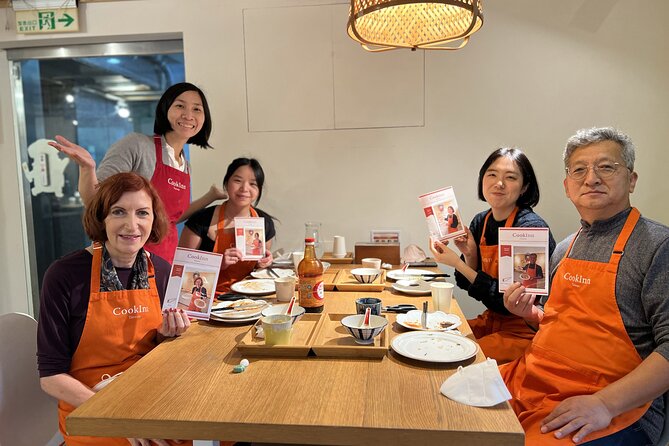
Taiwanese breakfast is not a hurried bowl of cereal. It is a warm, savory meal built around crisp dough, soft eggs, and fresh soy milk. At CookInn Taiwan, you make three classics from the ground up: scallion pancakes, dan bing, and soy milk.
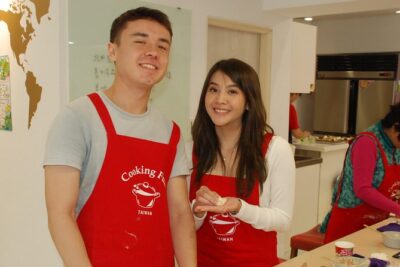
I like the hands-on format, since you are not simply watching a chef work. I also like the small group limit of 10, which gives the class a more personal feel. The main drawback is the early 9:30 am start, plus the $79 price, which is more than you would pay for breakfast at a local shop.
Key Points
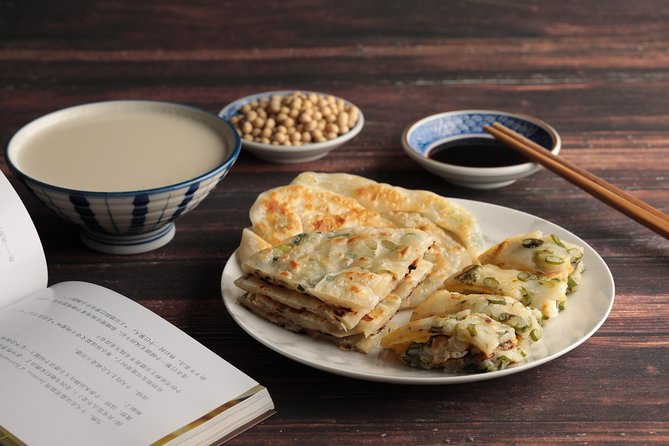
- Three breakfast staples in two hours: Make scallion pancakes, dan bing, and soy milk in one compact morning class.
- Scallion pancakes from scratch: Learn how the dough becomes crisp, layered, and fragrant.
- Soy milk made from soybeans: This is more than opening a carton and pouring a drink.
- Small group setting: The class accepts a maximum of 10 participants.
- Diana and her staff teach the class: The instruction is described as friendly, practical, and patient.
- Easy planning: Meet at CookInn Taiwan’s Ximen classroom at 9:30 am and finish at the same place.
A Taiwanese Breakfast Worth Getting Up For
Taiwanese breakfast is one of the country’s most approachable food traditions. You do not need a formal dining room or a special occasion. Small breakfast shops serve hot, filling food early in the day, often built around dough, eggs, soy, and scallions.
This class gives you a way to understand that meal by making it yourself. Instead of simply eating an unfamiliar pancake or egg crepe, you learn how each part comes together. That matters because the appeal of Taiwanese breakfast is largely in the texture: flaky layers, tender eggs, and smooth, fresh soy milk.
The menu is focused. You make a multi-layered scallion pancake, a soft dan bing, and soy milk prepared from soybeans. These are not three unrelated dishes. Together, they form a classic breakfast combination, with the pancakes providing crisp and savory bites, the egg crepe adding softness, and the soy milk supplying a warm drink.
The class lasts about two hours, so the pace should feel active without taking over your morning. You will need to arrive ready to work rather than expecting a long lecture. That is good news if you want to cook, but less appealing if you prefer a demonstration where someone else handles the messy parts.
More taiwanese cooking classes in Taipei:
- Xiao Long Bao, Beef Noodles & Boba Tea Cooking Class in Taipei
★ 5.0 · 159 reviews - Xiao Long Bao, Chicken vermicelli with mushroom and sesame oil, Tofu strips salad, Bubble milk tea. Taiwan Traditional Delicacies Experience-A (Taipei Cooking Class)
★ 5.0 · 79 reviews - Taipei Cooking Class & Market Adventure in Historic Dadaocheng
★ 5.0 · 77 reviews
Meeting at CookInn Taiwan’s Ximen Classroom
The class begins at 9:30 am at CookInn Taiwan’s Ximen classroom, located at 105 Bo’ai Road, fourth floor, in Taipei’s Zhongzheng District. The activity ends back at the same meeting point.
The location is near public transportation, which makes the early start easier to manage. I would still allow extra time to find the building and reach the fourth floor, especially if you are not yet familiar with Taipei’s street layout. A mobile ticket is provided, so you can keep the booking on your phone rather than carrying a printed voucher.
The start time deserves attention. A 9:30 am class is later than the opening hour of many Taiwanese breakfast shops, but you should still plan to eat breakfast here rather than beforehand. The class is designed around making and eating a full breakfast, and the food arrives at the end of a hands-on session.
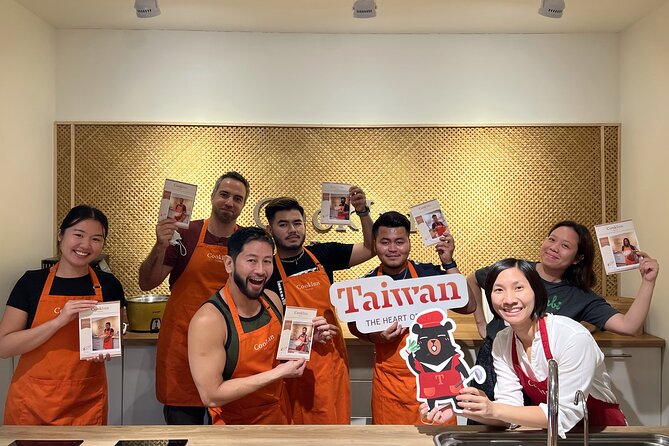
CookInn Taiwan limits this activity to 10 people. That is a useful size for a cooking class. You are likely to have enough room to follow the steps and ask questions, while still getting the social energy that makes a shared kitchen enjoyable. The available information does not promise a private class, so you should expect to work alongside other participants.
Turning Dough Into Layered Scallion Pancakes
The scallion pancake is likely to be the most technically interesting part of the morning. The goal is not a flat piece of dough with onions scattered on top. The classic version has multiple layers, with a crisp outside and a chewy, flaky interior.
You make the dough from scratch, then learn the method that creates those layers. The important lesson is that the final texture depends on how the dough is handled, shaped, and cooked. A ready-made pancake might give you the flavor, but it would not teach you why the dish has its distinctive bite.
This is also the part of the class with the best take-home value. Once you understand the basic process, you can try making scallion pancakes again in your own kitchen. The technique may require practice, but it is more useful than learning a dish that depends on hard-to-find equipment or a long list of unusual ingredients.
Do not expect perfect restaurant results on your first attempt. Layered dough can be fussy, and a cooking class has to move at a group pace. The point is to learn the method, eat the results, and leave with a better sense of what to look for when you order one in Taipei.
Learning the Soft Texture of Dan Bing
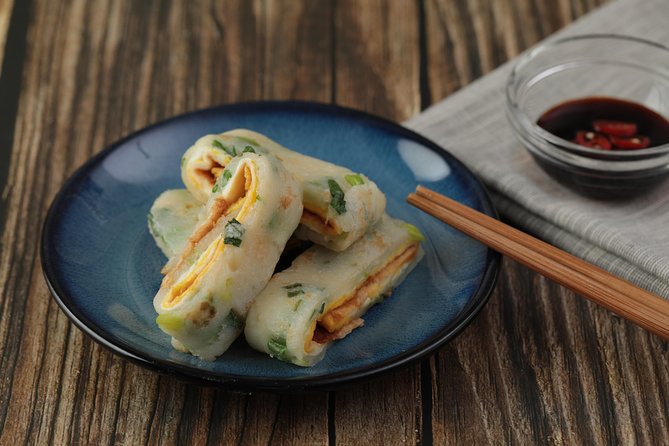
Dan bing is a Taiwanese egg crepe, and its charm comes from its tender texture. It is softer and more delicate than the scallion pancake, so making both dishes in one class gives you a useful contrast.
The class teaches the secrets of making the egg crepe tender and soft. That wording points to the main lesson: dan bing is not just an egg fried on top of dough. The crepe and egg need to work together, creating a breakfast item that is light enough to fold or eat in easy bites.
For you, this part may be less intimidating than the scallion pancake. There is still technique involved, but the dish is familiar in spirit. Eggs are an accessible starting point for cooks of almost any level, including families cooking together.
One parent and daughter found the class practical and fun, which fits the menu well. The recipes are hands-on without being so advanced that beginners have no chance of keeping up. If you are cooking with a child, the two-hour length also keeps the morning manageable, though the early hour and kitchen work may not suit very young children.
A few more Taipei trips to weigh up
- Xiao Long Bao & Boba Tea Cooking Class in Taipei
★ 5.0 · 28 reviews - Xiao Long Bao, Pork thick soup, Bubble milk tea. Taiwan Traditional Light Meals Experience-B (Taipei Cooking Class)
★ 5.0 · 24 reviews - Street Food Cooking Class in Taipei : Gua Bao/Lu Rou Fan/Boba Tea
★ 5.0 · 22 reviews - Xiao long bao, Pork thick soup, Bubble milk tea. (Taiwan Cooking Class)-B
★ 5.0 · 18 reviews
Making Soy Milk From Soybeans
The soy milk adds a different kind of lesson. You are not simply mixing a powdered drink or pouring a packaged beverage. The class includes soy milk made from soybeans, giving you a look at the ingredient behind a familiar Taiwanese breakfast drink.
That step broadens the class beyond pancakes and eggs. Soy milk is common in Taiwanese morning meals, but many visitors encounter it only after it has already been prepared. Seeing it made from soybeans helps connect the finished drink with the basic food tradition.
The provided details do not spell out every stage of the soy milk process, so you should not book this expecting a full lesson in tofu production or soy processing. The clear promise is fresh soy milk made from soybeans as part of the breakfast feast.
Taste is personal here. If you already enjoy soy milk, this should be an especially satisfying part of the meal. If you are unsure about it, the class offers a low-pressure way to try it alongside foods you have helped prepare yourself.
The People Leading the Morning
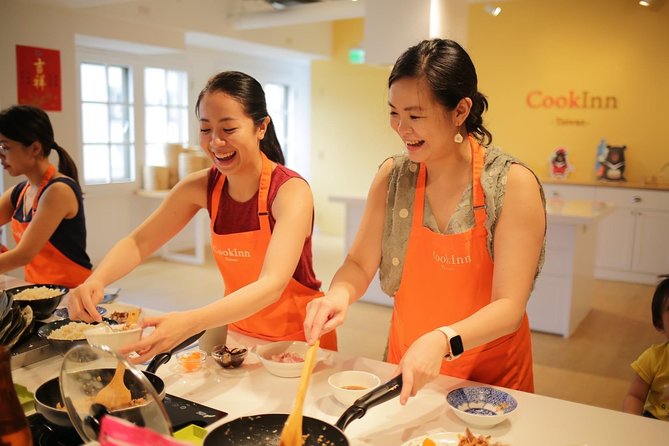
Diana and the CookInn Taiwan staff are named as the hosts and instructors for the experience. Their teaching style is described as hospitable, friendly, and patient, with time given to help participants learn the skills.
That matters in a small cooking class. A recipe can be printed on a card, but the useful information often comes from watching how dough feels, seeing how an egg crepe should look, or getting a correction before a technique goes off track. A patient instructor can make the difference between a stressful kitchen exercise and an enjoyable one.
The class also suits people who like to ask questions. The group limit of 10 does not guarantee individual attention at every moment, but it is far more favorable than a large demonstration with dozens of people.
The teaching is practical rather than purely cultural. You will gain food context by making the dishes, but the central activity is cooking. If you want a long history lecture about Taiwanese food, this may feel too focused. If you want to learn breakfast recipes and eat what you make, it is better aligned.
What the Two-Hour Schedule Means for You
The morning has a clear rhythm. You arrive at 9:30 am, receive instruction, prepare the three dishes, and eat the finished breakfast before returning to the meeting point. The total time is about two hours.
That compact schedule works well in Taipei. You still have most of the day available for temples, museums, markets, shopping, or another food stop. The experience also gives you a practical reason to begin the day in a different part of the city rather than waiting for lunch.
At the same time, two hours means the class cannot cover every Taiwanese breakfast favorite. You will not be making a full street stall menu. There is no indication that items such as fried dough sticks, rice rolls, or turnip cakes are included, so book this for the three listed dishes rather than a broad survey.
The class ends where it begins. That simplifies planning, especially if you have luggage, a later reservation, or a full day mapped out. You will not need to arrange a separate pickup or figure out where the meal finishes.
Is $79 a Fair Price?
At $79 per person, this is not the cheapest way to eat breakfast in Taipei. A local breakfast shop will cost much less, and you can sample several dishes without spending anything close to the class fee.
The value comes from the activity, not just the food. You receive roughly two hours of instruction, practice making three items, and a meal built from your own work. The small maximum group of 10 also supports the price, since the format should allow more contact with the instructor than a large public demonstration.
I would consider it good value if you want to recreate Taiwanese breakfast at home, enjoy cooking with a companion, or prefer food experiences that teach a skill. It is weaker value if you only want to taste the dishes. For that goal, Taipei’s breakfast shops offer more variety for less money.
The class may be especially worthwhile for someone who has already visited Taiwan’s food stalls and wants to understand the cooking behind the dishes. It also works nicely as a first-day food activity, since it introduces familiar local flavors in a guided setting.
Who Will Enjoy This Class Most
This experience is a strong fit for:
- Couples or friends who enjoy cooking together
- Families with older children who can take part in kitchen tasks
- First-time visitors who want a clear introduction to Taiwanese breakfast
- Home cooks interested in dough, eggs, and soy-based recipes
- Repeat visitors looking for a practical food activity rather than another restaurant meal
You should think twice if you dislike early starts, have no interest in cooking, or want a very broad food tour. The menu is narrow by design, and the focus stays on the three breakfast dishes.
Most people can participate, according to the activity information. Specific details about dietary substitutions, kitchen access, or special assistance are not provided, so contact CookInn Taiwan before booking if those points matter to you.
The class is also a good choice for people who like to take more than photos home from a trip. Recipes and technique can outlast a souvenir, especially when the dish is realistic to make again.
Planning Around Booking and Cancellation
The class is often reserved about 23 days ahead, so I would not leave it until the last morning of your Taipei stay if the date matters to you. Confirmation arrives when you book, and the mobile ticket makes the reservation easy to carry.
Free cancellation is available up to 24 hours before the 9:30 am start time. Cancel later than that and the payment is not refunded, while changes inside that 24-hour window are not accepted. The cut-off uses Taipei local time.
The activity requires good weather and a minimum number of participants. If poor weather or low enrollment causes cancellation, you are offered another date or experience, or a full refund. That policy is worth noting when you build a tight itinerary.
The Final Taste Test
I would book this class if you want to do more than eat Taiwanese breakfast. The three dishes are useful, recognizable, and varied enough to make a two-hour lesson feel complete. The small group limit, practical teaching style, and same-place return also make the outing easy to fit into a Taipei morning.
I would skip it if the $79 cost bothers you or if your priority is maximum food variety. You can eat more cheaply and sample more dishes on your own. But for hands-on instruction, a fresh breakfast, and skills you can try again at home, CookInn Taiwan offers a focused and friendly choice.
FAQ
How long does the Taiwanese breakfast cooking class last?
The class lasts approximately two hours.
What time does the class begin?
The class begins at 9:30 am.
Where does the class meet?
It meets at CookInn Taiwan’s Ximen classroom at 105 Bo’ai Road, fourth floor, in Taipei’s Zhongzheng District.
Where does the activity end?
The activity ends back at the meeting point.
What dishes will I make?
You will make multi-layered scallion pancakes, dan bing egg crepes, and fresh soy milk made from soybeans.
How many people can join the class?
The class has a maximum of 10 participants.
Can I cancel for a refund?
Yes. You can cancel at least 24 hours before the experience start time for a full refund. Cancellations or changes made less than 24 hours before the start are not accepted for a refund.
More Workshops in Taipei
- Taipei Calligraphy Workshop (DIY incl.)
★ 5.0 · 19 reviews - Taiwanese Gourmet Cooking Class in Taipei
★ 5.0 · 18 reviews - Taipei: Cooking Class & Market Adventure Historic Dadaocheng
★ 4.9 · 17 reviews - Taiwanese Food Culture and Cooking Class
★ 5.0 · 16 reviews
Just added around Taipei
- Vintage Taipei – Best of Taiwan and Sunset Walking Tour★ 5.0 · 4 reviews
- Private Yangmingshan National Park Hiking Day Tour from Taipei★ 5.0 · 5 reviews
- Yilan 1-Day Private Tour to Kavalan Whisky & Cultural Gems★ 4.5 · 3 reviews
- Xiao Long Bao, Chicken vermicelli with mushroom and sesame oil, Tofu strips salad, Bubble milk tea. Taiwan Traditional Delicacies Experience-A (Taipei Cooking Class)★ 5.0 · 8 reviews
- Best of Taiwan 9 Days Tour★ 3.5 · 3 reviews
- Keelung Shore Excursion: Private 6H Natural Wonder & Seafood Tour★ 5.0 · 3 reviews
- Xiao Long Bao, Chicken vermicelli with mushroom and sesame oil, Tofu strips salad, Bubble milk tea. Taiwan Traditional Delicacies Experience-A (Taipei Cooking Class)★ 5.0 · 5 reviews
- Two-day Sun Moon Lake & Alishan Forest Park Tour Package★ 4.0 · 5 reviews
Taiwanese Cooking Classes, compared.
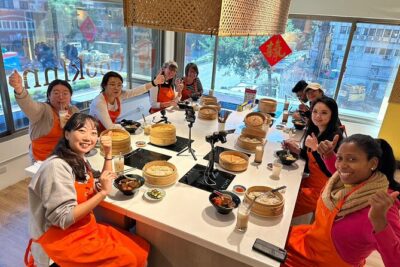
Xiao Long Bao, Beef Noodles & Boba Tea Cooking Class in Taipei
Read our review →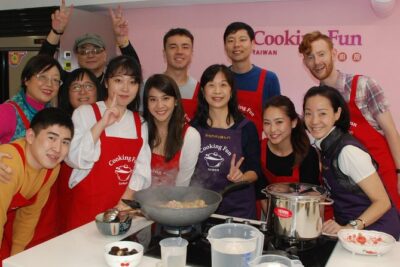
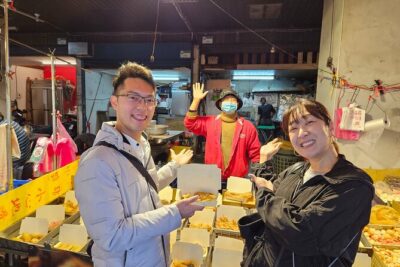
Taipei Cooking Class & Market Adventure in Historic Dadaocheng
Read our review →
Xiao Long Bao & Boba Tea Cooking Class in Taipei
Read our review →
Xiao Long Bao, Pork thick soup, Bubble milk tea. Taiwan Traditional Light Meals Experience-B (Taipei Cooking Class)
Read our review →
Street Food Cooking Class in Taipei : Gua Bao/Lu Rou Fan/Boba Tea
Read our review →
Xiao long bao, Pork thick soup, Bubble milk tea. (Taiwan Cooking Class)-B
Read our review →Browse the lists this tour appears in