
Reviewed · WALKING TOURS
Taipei Old Town – Taiwan Introduction Walking Tour (Tip-Based)
Taipei’s old town makes the most sense when someone explains the forces behind it. This walking tour links parks, markets, Japanese-era buildings, and Ximending with Taiwan’s difficult political past, including the 228 Incident and Chiang Kai-shek’s arrival after the Chinese Civil War. It is less about checking off monuments and more about understanding why Taipei looks and feels the way it does today.
I like the way the tour connects history with ordinary city life, rather than keeping the past inside museums. I also like the guide-led storytelling. Names that come up in the guiding team include Vincent, Bessy, James, Leo, Tâilé, Chester, Veronica, Bri, and Andy, with a style that ranges from serious historical explanation to dry jokes and local food suggestions.
The main consideration is that this is a walking and standing tour in Taipei’s heat and humidity. Some routes include steps and uneven stone paths, and the visit can run longer when the group has many questions. You should also remember that the $5 booking fee is not the guide’s tip.
Key points before you book
- A history-first route: Learn about Qing influence, Japanese rule, the 228 Incident, martial-law-era politics, and modern Taiwan while walking through the old city.
- Five useful stops: The route includes 228 Peace Memorial Park, Chengzhong Market, Ximending, the Red House, and Taipei Zhongshan Hall.
- A strong first-day choice: The walk helps you get your bearings before returning to Ximending and nearby old-town streets on your own.
- Tip-based pricing: You pay $5 per person to book, then give the guide an additional tip that is not included.
- Guides with different personalities: Vincent, Bessy, James, Leo, Tâilé, Chester, Veronica, Bri, and Andy are among the named guides connected with the experience.
- Bring practical basics: Wear comfortable shoes, carry water, and have cash available for drinks, snacks, or a tip.
Why Taipei’s old town is the right place to start
Taipei’s central districts compress several chapters of Taiwan’s story into a fairly small area. A Japanese colonial office, a memorial park, a covered market, a former public auditorium, and one of the city’s main shopping districts all appear on this route.
That makes the tour useful for you if Taiwan’s political history feels confusing. The guide can place individual buildings and events into a timeline, then show how those events still affect public life and identity. You are not simply hearing that Japan ruled Taiwan or that the Republic of China government arrived after 1949. You are shown where those eras left their mark.
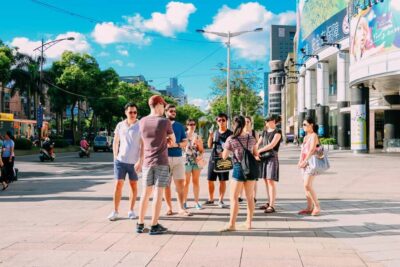
The route also gives you a practical sense of Taipei. You begin near NTU Hospital Station and finish in Ximending, an area filled with shops, restaurants, clubs, and bars. After the walk, you can return to places that caught your eye instead of trying to understand the city from a subway map alone.
The tour lasts about 2 hours 15 minutes, although a question-heavy group may take longer. That is worth knowing if you have a tightly packed day. It is a good opening activity, but I would not schedule an immediate airport transfer or timed attraction afterward.
A few more Taipei trips to weigh up
- Taipei Historic Shared Walking Tour
★ 5.0 · 189 reviews - [Private Tour] Shilin Night Market Walking Tour With a Private Tour Guide (2-hr)
★ 5.0 · 123 reviews - Taipei: 2-Hour Raohe Night Market Walking Tour
★ 4.6 · 69 reviews
Starting near NTU Hospital Station
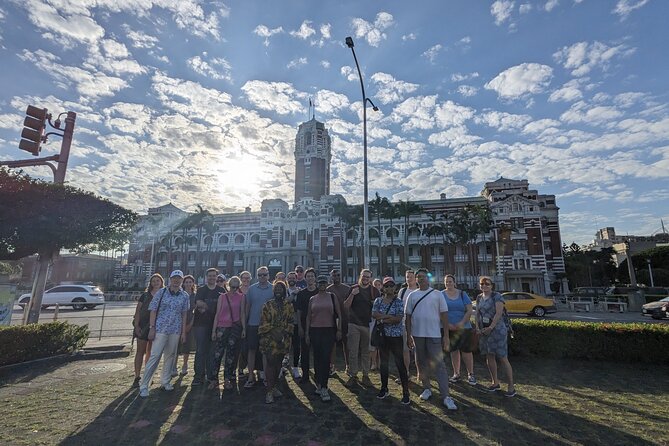
The meeting instructions direct you to NTU Hospital Station Exit 4 at street level. The listed starting point is also given as YouBike 2.0100 in Taipei’s Zhongzheng District, so check your booking confirmation carefully and use the WhatsApp group supplied for anyone who is late or lost.
The tour begins with a useful advantage: you are already near several important government and historic sites. This is not a long transfer to a distant suburb. Once the guide gathers the group, the walk quickly moves into Taipei’s central story.
Because the tour is tip-based, the guide’s job is especially important. A clear speaker who can handle questions will make the same route far more useful than a simple procession from one building to the next. The named guides have different approaches. James is described as especially funny, while Bessy and Leo are noted for careful explanations. Tâilé is associated with an energetic, engaging style, and Vincent with a particularly serious interest in Taiwan’s past.
You should expect interpretation rather than formal museum presentation. The best use of the tour is to ask questions when the political background is unclear. Guides have discussed Qing and Japanese influence, the 228 Incident, Chiang Kai-shek’s move to Taiwan, present-day politics, and the way ordinary people experienced these changes.
228 Peace Memorial Park and the February 28 Incident
The first major stop is 228 Peace Memorial Park, where you spend about 20 minutes. The park is named for the February 28 Incident of 1947, one of the most painful events in Taiwan’s modern history.
This stop gives the tour its emotional center. The guide explains the background to the incident and why it remains important to Taiwan’s sense of identity. The subject is not treated as a footnote to a sightseeing walk. It helps explain the long period when political speech was restricted and why historical memory can still carry real weight.
You will see memorials in a public green space rather than entering a distant historical site. That setting matters. Taipei residents pass through the park as part of city life, while the memorials ask you to pause and consider what happened there and elsewhere in Taiwan.
Allow yourself time to listen. This is not the place to rush ahead for photographs. The discussion may be serious, but it gives the rest of the walk a clearer purpose. If you prefer a light introduction with little politics, this tour may feel more demanding than a general sightseeing circuit.
The Presidential Office Building and the marks of Japanese rule
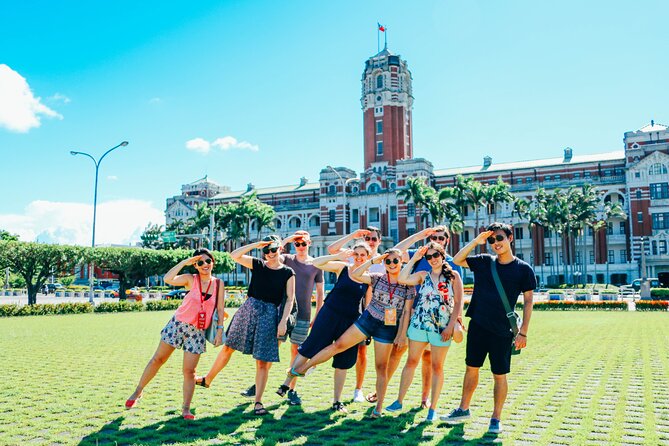
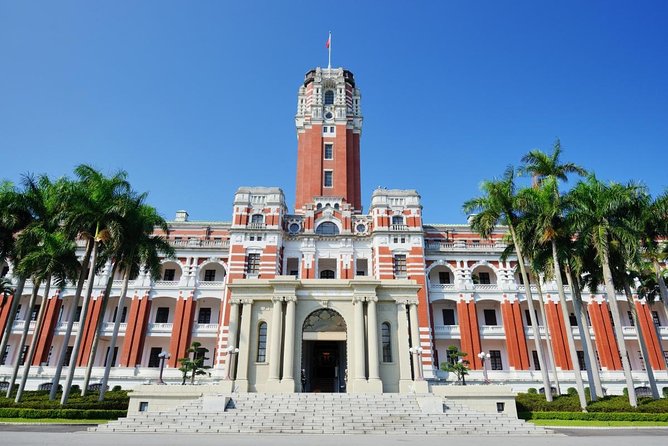
The route continues toward the Presidential Office Building, originally built during the Japanese colonial period as the Office of the Governor-General of Taiwan. It remains one of the most recognizable buildings in Taiwan.
The building is useful because it shows how architecture can reflect political power. The Japanese colonial government created a formal administrative center, and the structure later became part of Taiwan’s modern political story. Your guide uses the building to explain who ruled Taiwan, how authority changed, and how those shifts affected the island’s people.
This is one of the route’s strongest transitions. You move from a memorial connected with political violence to a major government building connected with colonial administration and present-day public life. The two stops are not isolated facts. Together, they help you see Taiwan as a place shaped by outside rule, local resistance, political repression, and later democratization.
The available information does not promise an interior visit, so plan to treat this as an exterior explanation and viewing stop. That is still worthwhile, especially if the guide helps you notice the building’s role rather than only its facade.
Same island, a completely different kind of day:
- From Taipei: Shifen, Jiufen, and Yehliu Guided Day Trip
★ 4.6 · 1,654 reviews - Full-Day Private Custom Taipei City Tour
★ 5.0 · 911 reviews - Taipei: Jiufen Night View and Shifen Day Tour
★ 4.6 · 870 reviews - Taipei: Taipei 101 Observatory Deck Entry Ticket
★ 4.6 · 847 reviews
Chengzhong Market, where old Taipei becomes everyday life
Chengzhong Market is a shorter stop of about 10 minutes. It is a covered market with logo T-shirts, household goods, and local snacks such as ba-wan dumplings.
This pause keeps the tour from becoming too solemn. After discussing government and political history, you see a working market where people shop, eat, and move through their daily routines. The market also gives you a quick introduction to the food side of Taipei without turning the tour into a tasting program.
Snacks are not included, so bring money if you want to buy something. The stop is brief, which means you may have time only to look around or make a quick purchase. If you want a full market meal, return later rather than expecting this portion to satisfy you.
I like this kind of stop because it shows how a city’s past survives in normal places. You are not only looking at official monuments. You are also seeing the commercial streets that make central Taipei feel lived in.
Ximending, Taipei’s youth culture center
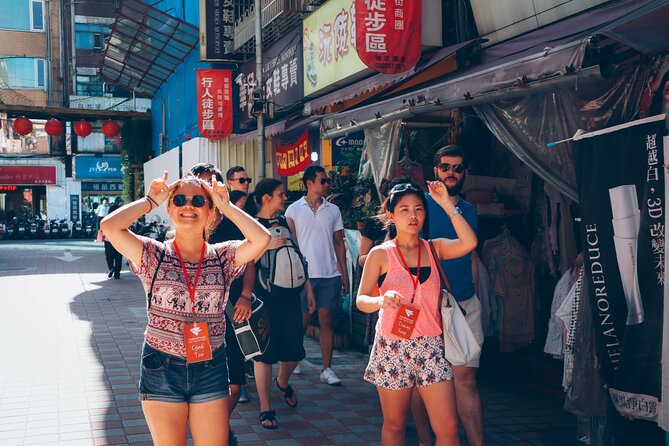
The longest stop is Ximending, with about an hour allocated to the area. Often compared with Harajuku, Ximending is a pedestrian shopping district packed with fashion stores, restaurants, clubs, and bars.
For you, this is where history meets present-day city culture most clearly. The area is not presented only as an old neighborhood. It is one of Taipei’s major places for entertainment, shopping, and youth culture. The guide can help you understand why Ximending became such an important social center while also pointing out places you may want to revisit later.
An hour gives you more breathing room than the short market stop. You can ask questions, take in the street activity, and begin noting restaurants or shops for after the tour. Still, do not expect a dedicated shopping break. The group’s movement and the guide’s talk remain the main purpose.
The area can feel crowded and noisy, especially around popular pedestrian streets. That energy is part of the point, but it may be tiring if you want a quiet historical walk. The route’s balance works well: you receive historical context first, then see how Taipei’s modern social life fills the same broad old-town area.
The Red House and Taipei’s creative side
Ximen Red House receives about 20 minutes. Built by the Japanese in 1908, this Western-style building and its surrounding square now support exhibitions, performances, and Taipei’s creative and cultural industries.
The Red House is a helpful example of reuse. A building from the colonial period has a present-day role that is not limited to preservation. It remains part of the city’s cultural program, with exhibitions and performances held there.
This stop also adds texture to the Ximending visit. You see the contrast between the district’s shopping streets and a historic structure used for art and public events. The guide can explain the building’s original purpose and its place in the neighborhood today.
The visit is listed as an exterior and area stop rather than a guaranteed performance or exhibition visit. If something is happening during your stay, you might choose to return after the walking tour for a closer look. The 20-minute timing is enough for an introduction, not a full cultural program.
Taipei Zhongshan Hall and the final walk
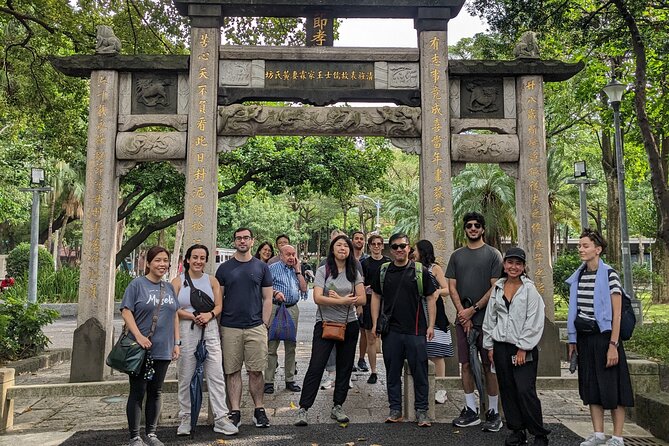
The final listed stop is Taipei Zhongshan Hall, which takes about 10 minutes. The historic building originally functioned as the Taipei City Public Auditorium.
This is a fitting end because it returns you to civic architecture after the commercial and cultural energy of Ximending. The building gives the guide another chance to explain how public spaces were used during different political periods and how Taipei’s institutions developed.
The tour ends at No. 4, Chengdu Road, in Wanhua District. That location puts you in a useful part of the city for continuing your afternoon or evening. You can stay in Ximending, look for food, or use the surrounding public transportation to reach another part of Taipei.
Do not expect the final stop to be a major interior tour. Its value comes from the building’s role and the explanation around it. If you want extensive architecture detail, you may want to return on your own.
The guides make the difference
The most highly praised part of this experience is the guiding. That matters more here than fancy transport or admission access, because the route’s value depends on how clearly someone explains Taiwan’s complicated past.
Bessy is described as patient with questions and strong at explaining the succession of outside rulers and the effect on local people. Leo is associated with clear explanations of Taiwan’s complex history, politics, and culture. Tâilé is described as enthusiastic and inclusive, with a talent for making serious material approachable.
James brings more humor into the walk. One account describes him turning the history lesson into a comic performance, while still discussing politics and culture in a useful way. Chester is also described as friendly and funny, and Veronica is noted for keeping a larger group moving at a comfortable pace in hot weather.
You cannot choose a specific guide from the information provided, so expect variation in delivery. That is not necessarily a weakness. Some people prefer a careful lecture, while others learn better through jokes and anecdotes. The consistent thread is that the guides focus on history rather than simply naming buildings.
The experience can also become longer when the group has many questions. I see that as a benefit if you want conversation, but it can be a drawback if you need to finish at a strict time.
Heat, rain, shoes, and the walking pace
Taipei’s weather can shape this tour. The route includes outdoor walking, and the heat and humidity can be tiring. Comfortable shoes are essential, especially since some parts may include steps or uneven stone surfaces.
Bring water. Guides have adjusted the route to provide shade and shelter during difficult weather, and one guide arranged an icy honey-lemon drink stop during a hot day. Another took the group for ice cream after a demanding section and suggested a lunch spot. These extras are not guaranteed, but they show how the pace may respond to conditions.
Rain is another factor. The experience requires good weather and may be canceled if conditions are poor. If that happens, you are offered another date or a full refund. Service animals are allowed, and the tour is near public transportation. The information also says most people can participate, but anyone concerned about steps, heat, or extended standing should plan carefully.
The walk is generally described as manageable, including for children, but that does not mean effortless. Taipei’s climate can make a moderate walk feel harder than expected. Start with water, a hat, and shoes you can comfortably wear for more than two hours.
What the $5 price really means
The $5 per-person booking fee makes this one of Taipei’s least expensive guided introductions. Admissions at the listed stops are free, so you are mainly paying to have someone organize the route and explain what you are seeing.
The important detail is that the guide’s tip is not included. Think of the $5 as a reservation fee, not the complete cost of the experience. Carry cash for the tip, drinks, snacks, and any ice cream or market food you choose to buy.
At this price, the value is strong if you want historical context on your first day. A private booking is identified in the activity information, although the guiding format described in the experience can involve a group. Confirm the exact arrangement when you book if group size matters to you.
Free cancellation is available when you cancel at least 24 hours before the start time. Changes or cancellations within 24 hours are not accepted for a refund. The provider may also require a minimum number of participants, and poor weather can lead to a different date or a full refund.
Who should book this Taipei walk?
I would choose this tour if you want to understand Taiwan before visiting its museums, memorial halls, or political sites. It is especially useful for first-time visitors who want a clear introduction to the city’s old center and a better grasp of Taiwan’s modern identity.
It suits you if you enjoy asking questions, listening to stories, and walking between several short stops. It also works well for families, provided everyone can manage the heat, steps, and time on foot.
You may want something else if you mainly want food tastings, interior access, or a quiet architectural tour. Chengzhong Market includes snacks, but food is not part of the price. Ximending is included as a cultural and historical stop, not as a dedicated shopping session.
FAQ
How much does the Taipei Old Town walking tour cost?
The booking fee is $5 per person. The guide’s tip is not included, so you should budget separately for that.
How long does the tour last?
The scheduled duration is approximately 2 hours 15 minutes. It may run longer if the group asks many questions.
Where does the tour begin?
The meeting instructions say to meet at NTU Hospital Station Exit 4 at street level. The starting point is also listed as YouBike 2.0100 in Taipei’s Zhongzheng District, so check your confirmation for the exact meeting details.
Where does the tour end?
The listed end point is No. 4, Chengdu Road, Wanhua District, Taipei City, near Ximending.
Which places are included?
The route includes 228 Peace Memorial Park, the Presidential Office Building area, Chengzhong Market, Ximending, Ximen Red House, and Taipei Zhongshan Hall.
Are admission tickets included?
The listed stops have free admission. The tour includes a professional guide, but snacks are not included.
Is a tip included in the booking fee?
No. The guide’s tip is separate from the $5 booking fee.
Is the tour suitable for children?
The information says most people can participate, and the route has been completed at a comfortable pace for children. You should still consider Taipei’s heat, humidity, steps, and uneven sections.
Can I bring a service animal?
Yes. Service animals are allowed.
What happens if I need to cancel?
You can receive a full refund if you cancel at least 24 hours before the experience starts. Cancellations or changes within 24 hours are not refunded. Poor weather or an insufficient minimum number of participants may lead to another date or a full refund.
Should you book it?
Book this walk if you want Taiwan’s history explained in the streets where it happened, not just a list of attractions. The combination of 228 Peace Memorial Park, Japanese-era buildings, a local market, and Ximending gives you a useful framework for the rest of your Taipei visit.
The $5 fee is excellent value, as long as you remember to tip separately and prepare for outdoor walking. Choose it early in your trip, wear good shoes, bring water, and leave room for questions. If your ideal tour is food-focused or centered on grand interiors, this is not the right match. If you want a thoughtful introduction to Taipei’s past and present, it is a smart place to begin.
Just added around Taipei
- Vintage Taipei – Best of Taiwan and Sunset Walking Tour★ 5.0 · 4 reviews
- Yilan 1-Day Private Tour to Kavalan Whisky & Cultural Gems★ 4.5 · 3 reviews
- Private Yangmingshan National Park Hiking Day Tour from Taipei★ 5.0 · 5 reviews
- Xiao Long Bao, Chicken vermicelli with mushroom and sesame oil, Tofu strips salad, Bubble milk tea. Taiwan Traditional Delicacies Experience-A (Taipei Cooking Class)★ 5.0 · 8 reviews
- Best of Taiwan 9 Days Tour★ 3.5 · 3 reviews
- Keelung Shore Excursion: Private 6H Natural Wonder & Seafood Tour★ 5.0 · 3 reviews
- Xiao Long Bao, Chicken vermicelli with mushroom and sesame oil, Tofu strips salad, Bubble milk tea. Taiwan Traditional Delicacies Experience-A (Taipei Cooking Class)★ 5.0 · 5 reviews
- Two-day Sun Moon Lake & Alishan Forest Park Tour Package★ 4.0 · 5 reviews
Walking Tours, compared.
![[Private Tour] Shilin Night Market Walking Tour With a Private Tour Guide (2-hr)](https://c.thetaiwanexplorer.com/wp-content/uploads/private-tour-shilin-night-market-walking-tour-with-a-private-tour-guide-2-hr-400x266.jpg)
[Private Tour] Shilin Night Market Walking Tour With a Private Tour Guide (2-hr)
Read our review →
2-hr Raohe Night Market Walking Private Tour with a Tour Guide
Read our review →
Vintage Taipei – Best of Taiwan & Sunset Walking Tour (Tip-based)
Read our review →
Taipei’s Origin & Longshan Temple – Taiwan Cultural Walking Tour
Read our review →Browse the lists this tour appears in